The entry is often the smallest part of a home and the first to fill with shoes, shopping bags and bits of mail. Making it work is less about a beautiful console table and more about understanding what comes through the door. A good system makes leaving as easy as arriving.
Watch the traffic for two days
Notice what people put down as soon as they enter: keys, bags, jackets, school notes, parcels or shoes. Also note which objects need to leave with them. Design around those habits rather than an imagined perfectly tidy household. If the nearest flat surface collects everything, you probably need a better landing spot there.
Do not block doors, escape routes or access to switches, especially in a narrow hallway.
Give shoes a realistic boundary
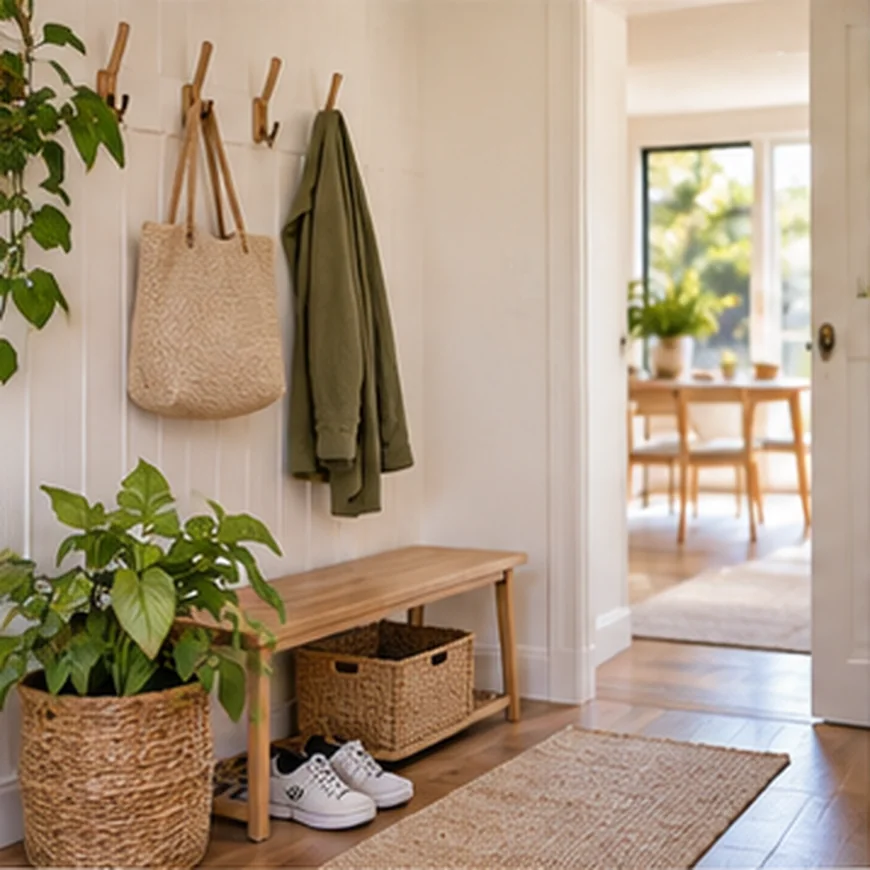
A tray for wet shoes, a low rack or a basket per household member can be enough. Avoid buying storage that holds only the shoes you wish people wore; count the pairs normally used during a week. Rotate out-of-season footwear elsewhere and keep the walking path clear.
If the entry is tiny, a shallow cabinet may work better than a bench—but measure door clearance and remember that cabinets need safe installation.
Create a keys-and-paper station
Put a dish, small tray or permitted hook where keys naturally land. Add one folder or basket for papers that need action, then schedule a moment to empty it. A large pile of 'important things' becomes difficult to search surprisingly quickly.
For children, a low, clearly labelled place for an everyday bag may be more usable than a high hook.
Add what the weather demands
Australian entries often need a place for hats, sunscreen, umbrellas or a light jacket rather than only winter coats. Choose the items your local climate requires. A washable mat that catches dirt before it reaches the main floor can be more useful than another decorative object.
Keep wet gear where it can dry appropriately rather than sealing damp items into storage.
Make leaving the house the final test
On the next busy morning, notice what you still search for. Move that item into the entry setup or give it a more predictable home. A useful entryway is not a staged photograph; it is a five-second answer to 'where are my keys?'
Start with a key dish and a clear shoe zone. Add storage only after you've watched what really arrives at your door.
LivingSpot articles provide general information. Consider your household, the property and current local safety requirements. Get appropriate professional advice for building, electrical, plumbing or other regulated work. Images are editorial illustrations of home settings, not evidence of completed LivingSpot projects.