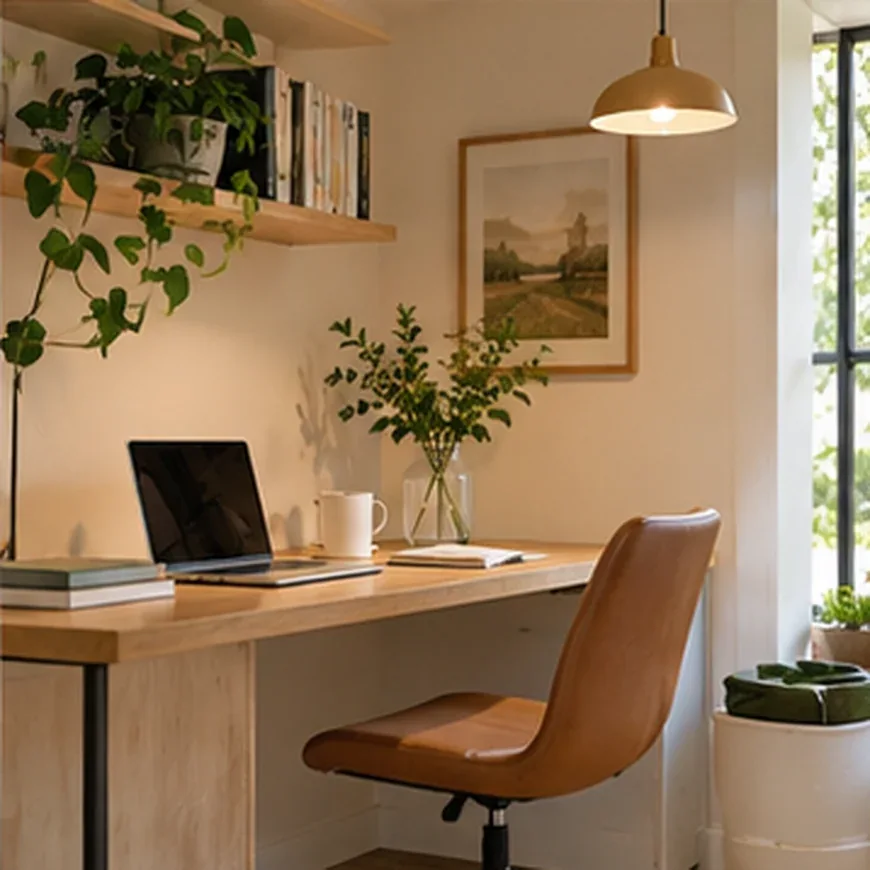
A small desk can be a very good workspace if the basic dimensions, light and storage suit the work you actually do. Before buying a large monitor arm or expensive chair, think about the equipment you use every day and the part of the room you're willing to dedicate to it.
Begin with the equipment footprint
Measure a laptop, keyboard, notebook and any monitor or tools you need. Lay them out on a dining table to see the comfortable working width and depth. Include the elbow room you need to write or use a mouse. If you only use a laptop for occasional tasks, a very deep permanent desk may be unnecessary.
Check that power points can be reached without loose cords crossing the floor.
Choose the spot for light and privacy
Daylight can make a workspace pleasant, but direct glare on screens can be tiring. Try placing the desk at a right angle to a window or adjust appropriate window coverings as needed. Consider background noise and whether you need to take confidential calls.
Avoid obstructing ventilation, exits or access to furniture that is used by others.
Think about how the chair fits
A desk is not truly compact if the chair can't pull out comfortably. Measure the chair footprint and movement space, especially in bedrooms or hallways. Choose a stable chair that supports a comfortable position and can be adjusted or supported appropriately for your needs.
For persistent discomfort, workstation advice from a suitably qualified professional is more useful than a generic posture promise.
Use vertical storage safely
A nearby wall shelf, narrow drawer unit or desktop organiser may free working space, but each has limits. Keep heavy items stable and do not overload shelves or attach unsupported fixings. A small box for chargers and stationery often does more for daily function than a large wall system.
Separate work papers from personal items so the desk can be reset quickly.
Protect the rest of the room
If the desk sits in a living area, plan what happens when work finishes. A drawer for the laptop, a cable clip and one tray for papers may help the space return to home mode. Your ideal workspace is the one that supports work without making the whole room feel like an office.
Set out your working equipment, measure the actual desktop you need and check chair clearance before browsing furniture.
LivingSpot articles provide general information. Consider your household, the property and current local safety requirements. Get appropriate professional advice for building, electrical, plumbing or other regulated work. Images are editorial illustrations of home settings, not evidence of completed LivingSpot projects.