Shelves often sit between storage and decoration. They need to hold books and everyday items, but they also sit in full view. The most practical shelf styling uses objects you genuinely like and avoids making access so fiddly that the display falls apart after a week.
Take everything off one section
Choose a single shelf or bay to work on. Clear it, wipe the surface and separate objects into books, useful items, sentimental pieces and things that belong elsewhere. You may find the shelves look better simply because unrelated paperwork and packaging have been removed.
Before rearranging, check that the unit is stable, within its load limits and appropriately anchored where required for safety.
Build from the books
Books provide structure, so start with the ones you want to keep nearby. Some can stand vertically with appropriate support; a short horizontal stack can create a base for a small, lightweight object. Avoid oversized piles that strain shelves or make a book difficult to remove.
Leave the books you actually read easy to reach. A display that makes normal use inconvenient won't last.
Vary height and shape
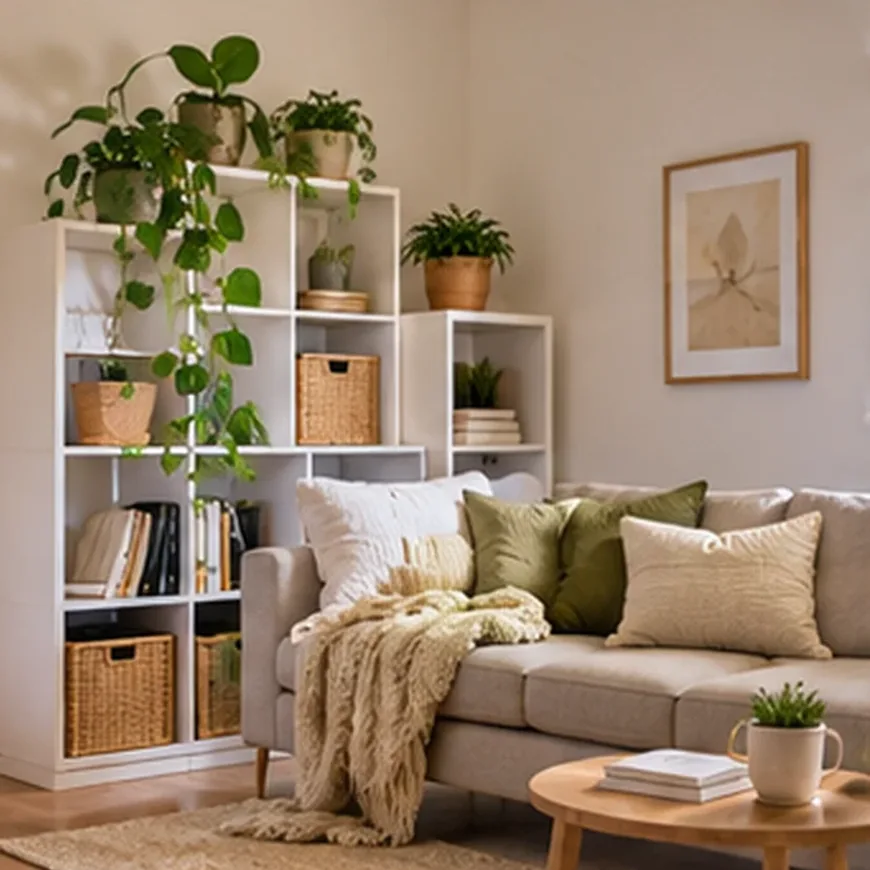
A tall vase beside a low bowl gives the eye different points to rest. Repeat a material—perhaps timber or ceramic—in a couple of places without creating identical symmetrical arrangements. You can create rhythm with three objects of different heights, but you don't have to follow a strict styling formula.
Choose pieces with personal meaning before shopping for ornaments solely to fill gaps.
Leave honest empty space
An empty patch makes the surrounding objects easier to see. If your shelf is also practical storage, allow enough room to take a basket out without knocking over a vase. Keep anything breakable or heavy where it can't easily fall, particularly in homes with children or pets.
A shelf with everyday things visible is still a real, well-used home.
Review it from across the room
Step back to the doorway and notice where your eye lands. If one section is crowded, move something elsewhere rather than adding more. Take a quick photo to spot the balance, then live with it for a few days. Repetition, breathing room and usefulness are better guides than perfection.
Start with books, add one meaningful object and leave some space. If the shelf remains easy to use, you've probably found the right balance.
LivingSpot articles provide general information. Consider your household, the property and current local safety requirements. Get appropriate professional advice for building, electrical, plumbing or other regulated work. Images are editorial illustrations of home settings, not evidence of completed LivingSpot projects.