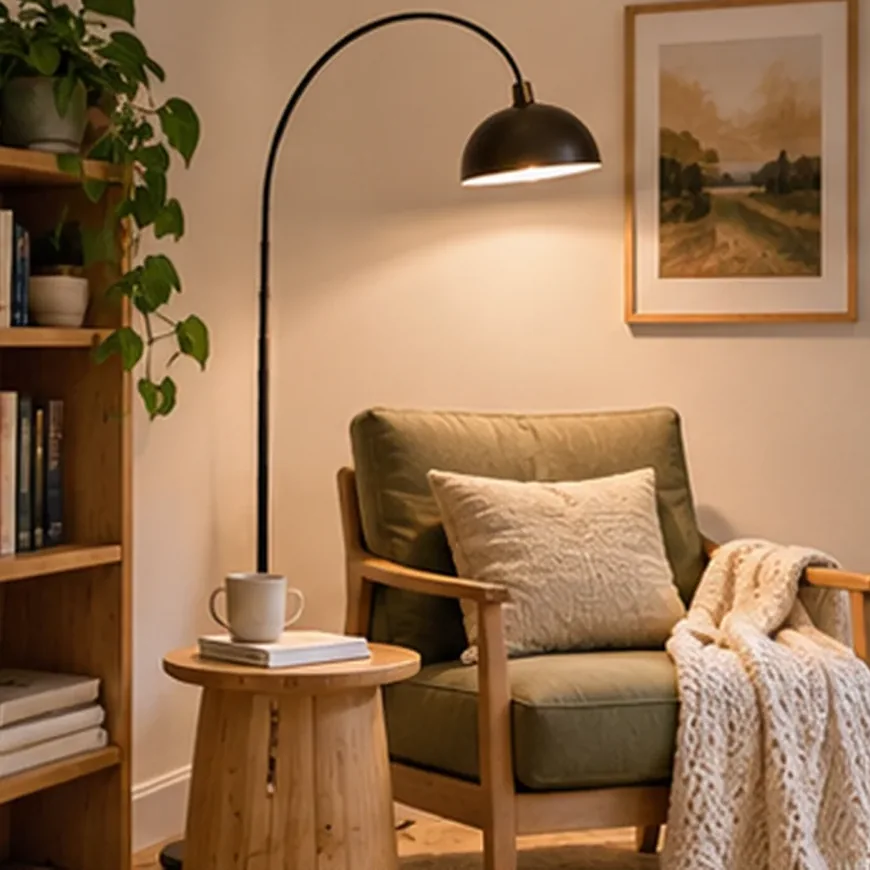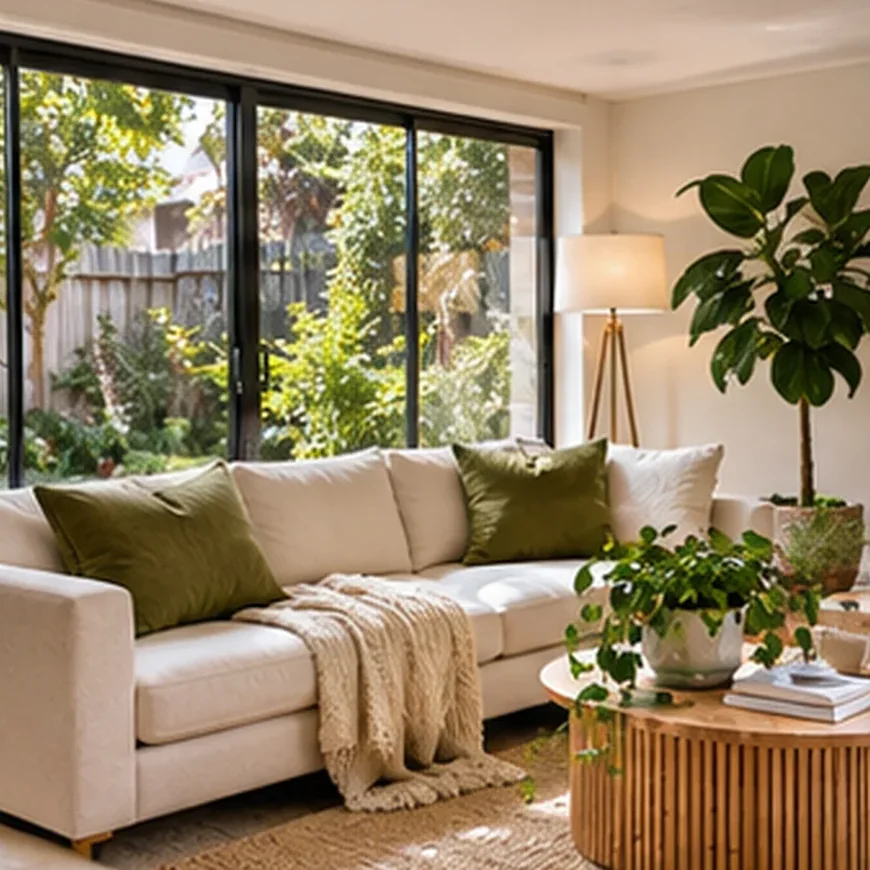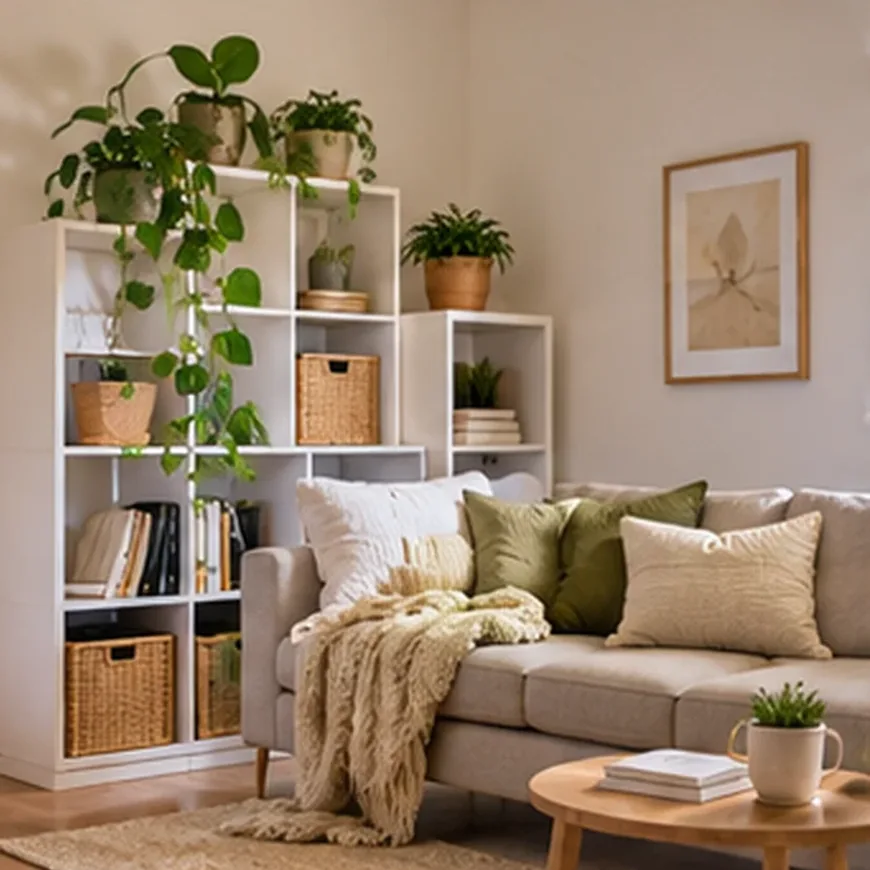
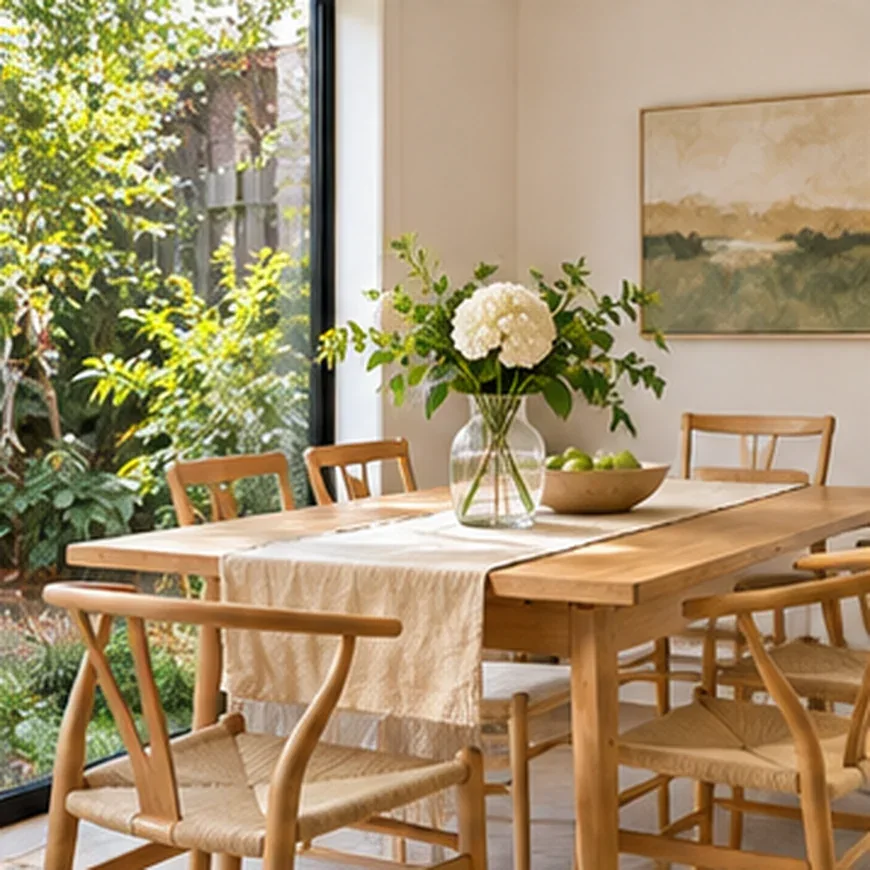
Neutral doesn't have to mean identical cushions, walls and timber in different shades of beige. The most welcoming neutral rooms usually have variation: warm light next to darker timber, a soft green leaf against cream fabric, perhaps a black metal detail to add definition. Start with what your room already contains.
Name the fixed finishes
Look at the floor, benchtops, cabinetry and large furniture that you aren't planning to change. Are they warm, cool or somewhere in between? A very orange timber floor may look richer against a muted green or soft off-white, while a cool grey tile can benefit from warmer textures. The aim isn't to erase existing finishes but to connect them.
Collect two or three small samples and view them in the room rather than making the decision solely on a screen.
Choose a light, middle and dark note
A simple starting combination might be an off-white wall, oak-toned timber and dark olive detail. Another could use a sandy beige, rust-coloured textile and deep charcoal accent. The dark note gives shape to the lighter materials. It might already be present in window frames, furniture legs or picture frames.
You do not need to repeat every colour in every corner. A few quiet echoes are enough.
Add texture rather than more ornaments
Linen, cotton, woven baskets, glazed ceramics and timber each reflect light differently. Even when colours are similar, the changes in texture stop a room feeling flat. Use what you own: a folded throw, a woven tray and a matte vase can bring more interest than another matching cushion.
Balance tactile surfaces with clear, practical areas that are easy to wipe and maintain.
Treat greenery as a colour
Plants add a lively green that changes with light and season. If live plants don't suit the available light or your routine, botanical prints or green textiles can do a similar visual job. Before bringing a plant into a home with pets or children, check whether the species is safe for them.
A single healthy plant in an appropriate location often has more impact than several struggling pots.
Use a simple sample board
Place swatches of fabric, paint chips, a timber sample and a photo of the existing floor on one sheet. Look at them in both daylight and evening light. Remove anything that feels unnecessary. A palette is useful when it makes future choices simpler, not when it forces the entire home into one formula.
Choose three anchors you already own—one light, one mid-tone, one dark—and bring in texture before introducing a new colour.
LivingSpot articles provide general information. Consider your household, the property and current local safety requirements. Get appropriate professional advice for building, electrical, plumbing or other regulated work. Images are editorial illustrations of home settings, not evidence of completed LivingSpot projects.